
Reclaimed Railway Sleepers: Oak or Azobe?
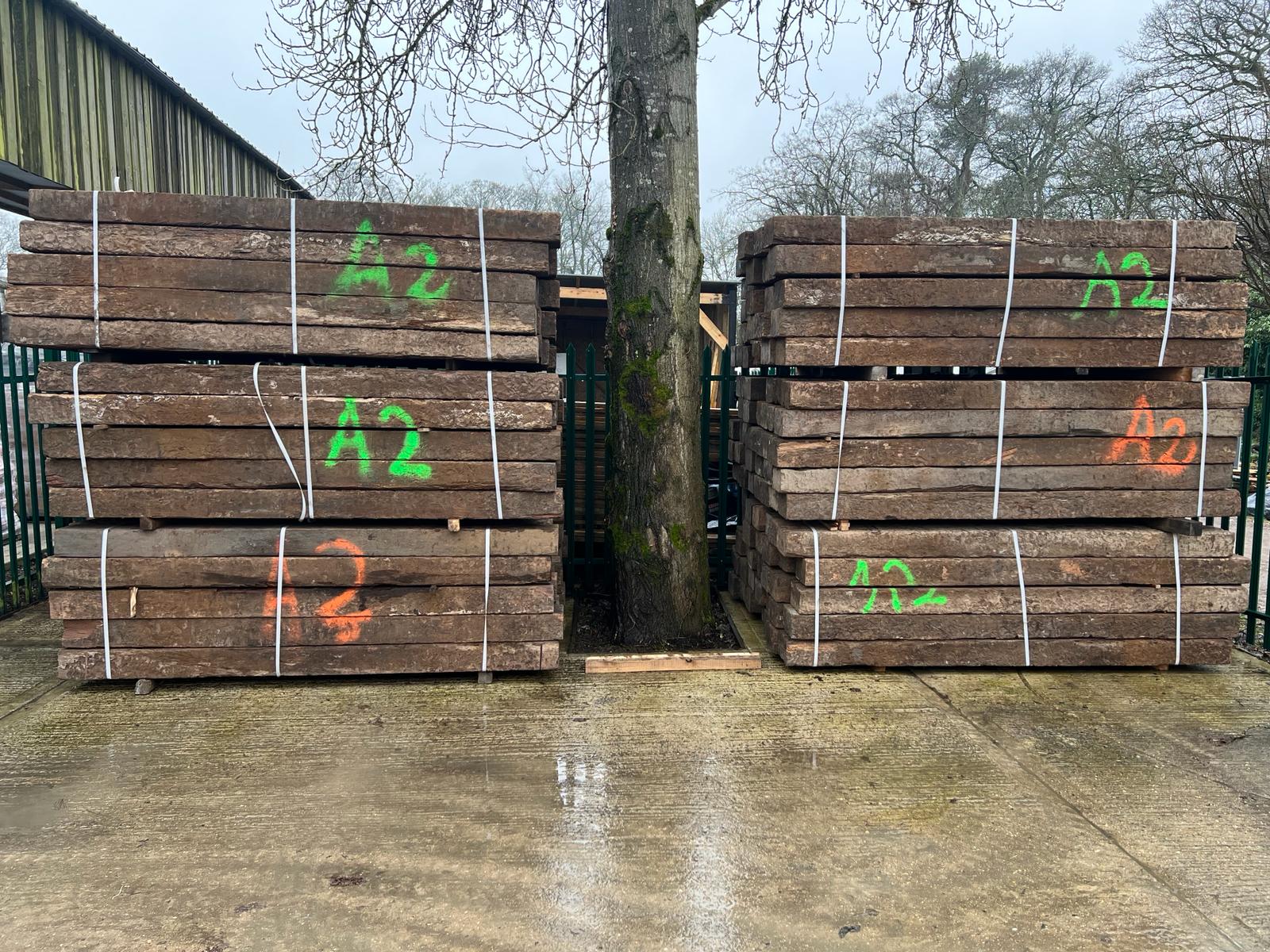
Grade A reclaimed railway sleepers are the genuine article – pulled from active railway service, graded for quality, and ready for a second life in your garden or outdoor project. They’ve become a favourite among UK homeowners for good reason. They’re affordable, genuinely sustainable, and bring real character to outdoor spaces. Each one bears the marks of years supporting Britain’s railways – bolt holes, weathering, the odd stain – which many people find rather appealing.
You’ll come across two hardwoods most often: European Oak and Azobe. They’re quite different beasts. Both are hardwoods, yes, but oak and azobe differ considerably in weight, appearance, and how they perform over time. Grade A means you’re getting sleepers with minimal damage, solid structure, and plenty of life left in them.
Why This Matters
Knowing the difference between oak and azobe isn’t academic – it’s practical. Order the wrong sleepers for your project and you’ve wasted money and effort. Azobe might be too heavy for a simple raised bed; oak might not have the strength you need for a retaining wall holding back soil. Getting it right first time means your project works, stays within budget, and actually lasts.
Oak suits traditional British gardens and lighter jobs. Azobe handles the heavy lifting and harsh conditions. Understanding what you’re working with helps you choose well, especially when reclaimed sleepers in the UK come in varying grades and conditions.
Oak vs. Azobe: Comparing the Two Materials
European Oak sleepers have warmth to them – tan to mid-brown tones with visible grain that feels properly British. They’re substantial without being unmanageable, typically around 60kg per sleeper. That’s still properly heavy, but two people can shift them without disaster. Oak is a hardwood with decent natural durability. It resists decay reasonably well, though prolonged moisture will gradually take its toll. Left untreated outdoors, oak weathers to a soft silver-grey, which most people find attractive.
Grade A reclaimed oak usually comes from Germany or Poland. German oak is typically slightly better quality – denser, tighter grain – which accounts for the modest price difference. Polish oak is excellent nonetheless, just a touch lighter and softer. Both work well for raised beds, garden edging, steps, and decorative features.
Azobe is another proposition entirely. This tropical hardwood is distinctly dark – deep chocolate to nearly black – with a dense, tight grain that looks modern and striking. It’s significantly heavier, often over 100kg per sleeper, so moving one alone isn’t sensible. But that weight reflects exceptional density, which makes azobe remarkably resistant to rot, insects, and our unpredictable weather. It’s what you choose for retaining walls, heavy-load work, and anywhere you genuinely need structural strength.
For a flower bed border or garden steps with moderate foot traffic, reclaimed oak sleepers make sense. They’re easier to handle, look traditional, and cost less. But if you’re building a retaining wall to hold back a sloping garden, or constructing something that needs to bear serious weight in all weathers, reclaimed azobe is worth the extra effort and expense. It simply won’t fail.
Reclaimed Sleepers at Harringtons
Practical Considerations for Working with Reclaimed Sleepers
These aren’t lightweight materials. Oak sits around 60kg per sleeper and azobe well over 100kg. You’re not moving them alone unless you fancy a hernia. Get a friend to help, use proper lifting technique – knees bent, back straight – and consider a sack truck for manoeuvring them around your garden.
You will need a chainsaw or similar heavy-duty tool to cut reclaimed sleepers. These dense, seasoned timbers can be hard as nails, which makes cutting them with ordinary saws a frustrating, exhausting slog. If you haven’t got the equipment or experience, it’s worth hiring someone who knows what they’re doing. A blunt hand saw and sore arms aren’t worth it.
Think about delivery early. Harringtons of Reading offers a flat £25 delivery fee regardless of quantity, which simplifies the whole logistics business. Whether you’re ordering three sleepers or thirty, the cost stays the same – a rare bit of straightforwardness in building supplies.
Treated vs. Untreated Sleepers
Many reclaimed sleepers – particularly older railway stock – have been treated with creosote. This thick, oily preservative protects timber from rot and insect damage, extending its working life considerably. It’s effective, but there are important safety considerations attached.
Treated sleepers must not be used where people will have skin contact with them. That rules out play equipment, garden furniture, or anything children will climb on. Creosote can also leach into soil, so avoid using treated sleepers for vegetable beds or planters where you’re growing edibles. For structural outdoor uses – retaining walls, steps, path edging – treated sleepers are perfectly fine and will outlast untreated alternatives.
Untreated or modern-treated sleepers (using safer, water-based treatments) are the better choice for areas involving skin contact or food growing, but they won’t last quite as long. You’re weighing lifespan against safety and environmental concerns. Choose based on what your project actually needs.
Buying Reclaimed Sleepers
Harringtons of Reading maintains substantial stock of Grade A reclaimed sleepers in oak and azobe, which means you’re not waiting weeks for supply. You’re getting sleepers with minimal damage, solid structure, and genuine years of use ahead of them.
Our flat £25 delivery applies whether you’re buying a few sleepers for a small raised bed or materials for a major landscaping job. That makes budgeting straightforward and costs predictable – useful if you’re working to a tight figure.
So, Railway Sleepers: Oak or Azobe?
Either way, at Harringtons, we’ve got you covered.